
First-Time Homebuyer Guide for Durango, Colorado

First-Time Homebuyer Guide for Durango, Colorado
Buying your first home is a big deal anywhere. Doing it in a mountain market like Durango adds a few wrinkles most national guides skip right over. Wells and septic. Radon. Wildfire insurance. Properties that sit twenty minutes up a dirt road. None of it is hard once you know what you're looking at, but you want to know going in.
Here's the thing. The basic path is the same whether you're buying in Durango or Denver. Get your money lined up, find the house, make the offer, survive the inspection, close. What changes is the local detail packed into each step. So let's walk it the way I'd walk a first-timer through it sitting across my desk.
Start with the money, not the listings
I know. Scrolling homes is the fun part. But the buyers who get burned are almost always the ones who fell in love with a place before they knew what they could actually borrow.
Talk to a lender first. A real pre-approval, not one of those thirty-second online "estimates." A lender pulls your credit, looks at your income and debts, and tells you the number a bank will actually fund. That number shapes everything that comes after.
While you're at it, ask about programs built for first-time buyers. Colorado has some good ones. The Colorado Housing and Finance Authority, which everybody just calls CHFA, runs down payment assistance that can cover a real chunk of your upfront cash. Their grant option goes up to the lesser of $25,000 or 3 percent of your first mortgage, and that money doesn't get paid back (CHFA, 2026). There's also a second-mortgage option up to 4 percent with deferred repayment. You have to take an approved homebuyer education class, usually around $75 online, and your household income has to land under the limits, which in 2026 reach roughly $130,400 for a one or two person household in non-targeted areas (Cedar Home Loans / CHFA, 2026). That's well above the local median, so more people qualify than think they do.
One quick definition while we're here. In Colorado, "first-time buyer" usually means you haven't owned a home in the past three years (Consumer Affairs, 2026). So if you owned years ago and have been renting since, you might still qualify. Worth asking.
Know your loan options
Most first-time buyers in our area use one of a handful of loan types.
Conventional loans are the standard. For 2026, the conforming loan limit in La Plata County is $832,750, which covers the vast majority of homes in town (FHFA / Rocket Mortgage, 2026). Go above that and you're in jumbo-loan territory, which comes with stricter requirements. That mostly matters for the higher end.
FHA loans let you put down as little as 3.5 percent and forgive lower credit scores, which makes them popular with first-timers. VA loans, if you've served, are about the best deal in housing, often zero down. And out in the rural parts of the county, USDA Rural Development loans can work with no down payment at all, though the single-family direct loan limit for La Plata County sits at $448,500 as of February 2026 (USDA Rural Development, 2026), so they fit modest rural homes more than ranches.
Your lender will help you sort which one fits. The point is, you've got options, and the right one depends on your credit, your cash, and where you're buying.
Find an agent who actually knows the area
This is not me being self-serving. Okay, a little. But a Durango-specific agent earns their keep in ways that matter for a first home.
A good local agent knows which neighborhoods flood-irrigate and which don't. Which roads the county plows and which the HOA does. Whether that "creek" on the listing photos runs year-round or dries up by July. They know the inspectors worth hiring and the lenders who close on time. National referral agents who parachute in for a deal pretty much never have this.
Ask around. Talk to two or three. Pick someone who answers their phone and tells you the truth even when it's not what you want to hear.
Make the offer
Once you find the one, your agent helps you build an offer. Price is only part of it. In our market the terms often matter just as much. Closing timeline, what stays with the house, which contingencies you keep, how much earnest money you put down to show you're serious.
Contingencies are your safety net. The inspection contingency lets you back out or renegotiate if something ugly turns up. The financing contingency protects you if the loan falls through. The appraisal contingency covers you if the home appraises below the price. First-timers sometimes get pressured to waive these to win a bidding war. Be careful with that. The protection exists for a reason.
Survive the inspection
Here's where mountain buying gets specific. A standard inspection covers the roof, foundation, electrical, plumbing, HVAC, all the usual. In Durango you'll want to go further.
Radon testing is close to mandatory around here. La Plata County's average indoor radon reading runs about 5.5 picocuries per liter, and there's roughly a 50-50 chance any given home tests above the EPA's action level of 4.0 (La Plata County Public Health via the Durango Herald, 2026). The good news, mitigation is usually cheaper and simpler than people fear. A vent system pulls the gas out from under the house before it ever reaches your living space.
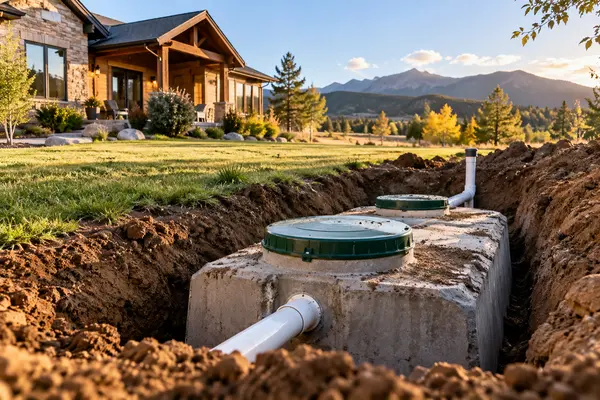
If the home is on a well, test the water and the flow rate. If it's on septic, get the system inspected and find out when it was last pumped. On a rural property, confirm the road access is legal and recorded, not just a two-track somebody's been using for years. Your agent should be flagging all of this before you ever write the offer.
Get to closing
After inspection comes the appraisal, the title work, and the final loan approval. Title work matters more here than in a tract subdivision. Mineral rights, easements, water shares, old access agreements, all of it shows up in the title commitment, and you want someone reading those exceptions carefully.
Then you sign. In Colorado, closings happen at a title company, and you'll bring a cashier's check or wire for your down payment and closing costs. Budget roughly 2 to 4 percent of the purchase price for closing costs, give or take, depending on your loan and the deal. Once it funds and records, the keys are yours.
A few first-timer mistakes to skip
Don't shop before you're pre-approved. Don't waive inspection to win. Don't blow your savings to zero on the down payment and leave nothing for the moving truck, the radon system, the snow tires. Don't open a new credit card or finance a truck between pre-approval and closing, because lenders re-check, and a new debt can sink your loan at the worst possible moment.
And don't rush. Durango isn't going anywhere. The right house for you is worth waiting for.
Budget for more than the purchase price
The sticker price is the number everybody fixates on, and it's not the whole story. First-time buyers who only plan for the down payment get caught flat-footed by everything else.
Closing costs come first. Budget roughly 2 to 4 percent of the purchase price for lender fees, title work, the appraisal, and prepaid taxes and insurance. On a $450,000 home that's somewhere around $9,000 to $18,000 on top of your down payment. Some of it can be negotiated as a seller credit in the right market, but plan for it.
Then there's the stuff that hits after you own the place. A radon mitigation system if your test comes back high. Snow tires, a snow shovel, maybe a snow blower, because Durango winters are real. Higher utility bills than you might expect, since heating a home at 6,500 feet through January costs more than people from warmer places assume. Wildfire-conscious insurance, which has gotten pricier across Colorado. And the ordinary surprise repairs that come with any home.
My rule of thumb for first-timers, don't drain your savings to zero on the down payment. Keep a cushion. Owning a home means you're now the one who pays when the water heater quits, and it always seems to quit at the worst time.
What happens once you're under contract
A lot of first-timers don't realize how much happens between "offer accepted" and "keys in hand." Here's the quick version so it's less of a black box.
You'll put down earnest money, usually 1 to 3 percent of the price, held in escrow to show you're serious. Then the clock starts on your contingency deadlines. Inspection happens early, usually within the first week or two, and that's your window to investigate and renegotiate or walk if something's wrong. The appraisal gets ordered by your lender. Title work gets reviewed. Your loan goes through underwriting, where the lender verifies everything one more time.
Each of these has a deadline written into the contract, and missing one can cost you. This is exactly where a good agent earns their fee, tracking the dates, chasing the lender and title company, and keeping the deal moving. Your job during this stretch is mostly to respond fast when your lender asks for documents, and to not do anything that messes with your credit. Stay boring. Boring closes deals.
Frequently Asked Questions
How much do I need for a down payment in Durango?
It depends on your loan. Conventional loans can go as low as 3 percent down, FHA as low as 3.5 percent, and VA or USDA loans can be zero down if you qualify. With CHFA assistance covering up to 3 percent as a grant, some first-time buyers bring far less cash than they expect (CHFA, 2026). Talk to a lender for your specific number.
What credit score do I need to buy a home in Colorado?
Most first-time buyer assistance programs in Colorado look for a minimum score around 620 to 640 (Consumer Affairs, 2026). FHA loans can go lower in some cases. Higher scores get you better rates, so it's worth checking your credit early and cleaning up any errors.
Are there first-time homebuyer programs specific to Durango?
The main programs are statewide through CHFA and CHAC rather than Durango-specific, but they apply to purchases here. Your lender can also flag any county or employer-based assistance that comes and goes. Always ask before you assume you don't qualify.
Should I test for radon when buying a home in Durango?
Yes. Southwest Colorado's geology puts local homes at higher radon risk than the national average, with La Plata County averaging about 5.5 pCi/L (La Plata County Public Health, 2026). A test costs little, and if levels are high, mitigation is usually straightforward and affordable.
How long does it take to buy a home in Durango?
From accepted offer to closing, a typical financed purchase runs about 30 to 45 days. Cash deals can close faster. Rural properties with well, septic, and complicated title can take a little longer because there's more to verify.
How much should I save beyond the down payment?
Plan for closing costs of roughly 2 to 4 percent of the purchase price, plus a cushion for moving, immediate repairs, and mountain-specific costs like snow gear and possible radon mitigation. Try not to drain your savings to zero, since a home brings surprise expenses from day one.
What is earnest money and how much is it in Durango?
Earnest money is a deposit, usually 1 to 3 percent of the purchase price, held in escrow to show the seller you're serious. It's credited toward your costs at closing. You can typically get it back if you back out within your contract contingencies, but losing those protections can put it at risk.
Ready to buy your first home in Durango?
The first one feels overwhelming until somebody walks it with you. That's the job. Ashley Blackmore and the team at HOMESFORSALEDURANGO.COM help first-time buyers across Durango, Bayfield, and the rest of La Plata County find the right place and get through closing without the surprises.
Call (970) 444-2431 or reach out through HOMESFORSALEDURANGO.COM to get started.
Recent Posts






Leave a reply