
Off-Grid and Rural Home Systems Near Durango: What Buyers Should Know

Off-Grid and Rural Home Systems Near Durango: What Buyers Should Know
City living hides a lot. Flip a switch, water flows. Flush, it goes away. Trash disappears on Tuesday. Move out to a rural property near Durango and you become the utility company. The water, the waste, the heat, the road, sometimes the power, all of it lands on you.
That's not a warning, exactly. Plenty of people love it. There's real freedom in owning your own systems and not depending on anybody. But you want to walk into it with your eyes open, because the romantic idea of country living and the reality of a frozen well line at six in the morning are two different things. Here's what actually runs a rural home out here.
Water comes from a well
Out past the city and district service areas, your water almost always comes from a private well. You own it, you maintain it, and you live and die by it.
A few things to understand. Wells have a depth, an age, and a production rate measured in gallons per minute, and that production can dip in dry years. They have pumps that wear out, pressure tanks that fail, and lines that can freeze if they're not buried deep enough or insulated right. None of this is catastrophic, but it's all yours to deal with.
The permit matters as much as the water. In Colorado, a well permit spells out exactly what you can use the water for. Some allow only indoor household use. Others allow livestock and limited irrigation. Buying a place expecting to water horses, a garden, or pasture, then finding the permit only allows indoor use, is a classic and avoidable mistake. Read the permit before you buy, every time.
Waste goes to a septic system
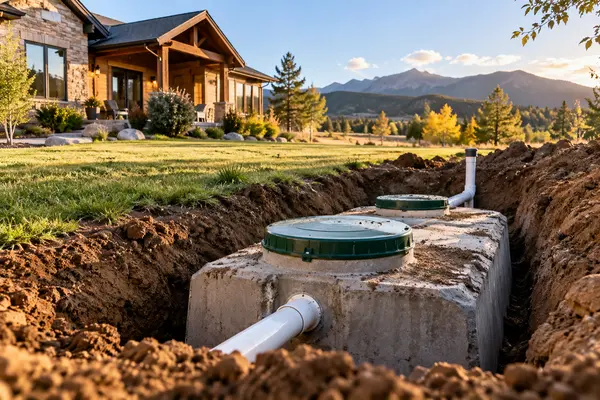
No city sewer out here either. Rural homes run on a septic system, officially an onsite wastewater treatment system, which is basically a tank and a leach field that treats and disperses everything the house drains.
Maintained well, septic systems run for decades. Neglected, they fail, and replacement runs well into five figures. So you pump it on schedule, usually every few years, you don't flush things that don't belong, and you keep an eye on the leach field. The capacity is tied to the home's bedroom count, which matters if you ever want to add on. More bedrooms can mean a bigger, pricier system.
When you buy, get the septic inspected and pumped and confirm its age, size, and permit status. This is non-negotiable on a rural purchase.
Heat usually means propane, sometimes wood
Most rural homes around Durango heat with propane, since natural gas lines don't reach out into the county. You'll have a tank in the yard, which you either own or lease from a supplier, and a truck comes to fill it.
Find out which you'd be getting. An owned tank gives you freedom to shop suppliers. A leased tank usually locks you to one company. Either way, propane is a real line item, and a big cold snap can run a tank down faster than you'd think. Many homes pair it with a wood stove or pellet stove for backup and ambiance, which also gives you heat when the power's out. Lots of folks out here keep a couple cords split and stacked by October.
Power, and the off-grid question
Most rural properties near Durango are on the grid through La Plata Electric, even well out of town. Truly off-grid homes, running entirely on solar with battery storage and a generator, exist but are the exception, not the rule.
If you're looking at a solar setup, learn the system. How old are the panels and the batteries, what's the capacity, is there a generator backup for the stretch of cloudy winter days, and what does it cost to maintain and eventually replace. Solar is great until a battery bank dies and you're staring at a five-figure replacement nobody mentioned. If the home's grid-tied with solar, that's usually the easier setup, since the grid covers the gaps.
Either way, ask about power reliability. Rural lines go down in storms, and out in the county the fix can take longer than in town. A generator isn't a luxury out here. It's pretty much standard equipment.
The road is your responsibility too
This one surprises people more than anything. That dirt or gravel road to the house? The county may not maintain it. Plenty of rural access roads are private, maintained by the owners they serve, often through a road maintenance agreement that splits the cost.
So ask. Who plows it in winter? Who grades it after the spring mud and the summer washboarding? Is there a recorded road maintenance agreement, and what does it obligate you to pay? And critically, is your legal access actually recorded, or is it just a road everyone's been using? Visible use and legal easement are not the same thing, and confirming recorded access is one of the most important things your title work does on a rural buy.
Winter access is its own reality check. A steep, north-facing driveway that holds ice and drifts can mean you're plowing your own way out before work, or not getting out at all on the bad days. Drive it, ideally in winter, before you fall in love.
Internet has gotten better, but check
Remote work changed who's buying rural land, and the first question now is almost always about internet. The good news, connectivity out here keeps improving, with fixed wireless, fiber expansion in some areas, and satellite options like Starlink filling the gaps where wired service doesn't reach.
Don't assume, though. Speeds and options vary a lot property to property, even within a few miles. If working from home is the plan, confirm exactly what service the specific address can get before you buy, not what's "available in the area." Ask the neighbors what they actually use.
Is rural living right for you?
Owning your systems means more responsibility and more cost, but also more independence and a lot more room and quiet. The people who thrive out here tend to be handy, or willing to learn, and they budget for the maintenance instead of being blindsided by it.
The people who struggle are the ones who pictured only the views and the elbow room and never thought about the well pump, the propane bill, the snow plowing, or the slow internet. Go in clear-eyed and country living near Durango is hard to beat. Go in starry-eyed and the learning curve can sting.
Fire mitigation is part of rural ownership
Living in the trees near Durango means living with wildfire risk, and that comes with responsibilities most city buyers never think about. It also increasingly affects whether you can get insurance, and what it costs.
Defensible space is the big one. That means clearing and managing vegetation in zones around the home, keeping the area closest to the structure lean, removing dead fuel, limbing up trees, and not letting brush crowd the walls. Insurers increasingly want to see it, and some won't write or renew a policy on a property that hasn't done the work. Fire-resistant building choices help too, like a Class A roof, ember-resistant vents, and noncombustible materials near the house.
The practical takeaway for a buyer. When you're looking at a rural property, look at it with fire in mind. How dense is the surrounding forest? Is there defensible space already, or is it a project you'll inherit? Is there a second way out if the main road's blocked? And get an insurance quote early in your due diligence, because insurance availability and cost on a wooded mountain property can genuinely affect whether the deal works. Better to learn that during your contingency window than after closing. The local FireWise programs are a good resource, and doing the mitigation work is one of the better investments you can make in a rural home, for safety and insurability both.
The rural logistics nobody mentions
Beyond the major systems, country living comes with a hundred small adjustments that add up. None are dealbreakers. They're just good to know before you're living them.
Trash and recycling usually aren't picked up at the curb out in the county. You either haul it to a transfer station yourself or arrange private pickup, which not every road gets. Mail can work differently too, often a cluster box down at the main road or a P.O. box in town rather than delivery to the door. Deliveries from the major carriers reach most places now, but remote addresses can be slower or occasionally skipped.
Then there's the seasonal rhythm. Spring mud season turns dirt roads into a mess. Summer thunderstorms can wash out a poorly built road. Fall is the time to stack firewood and service the systems. Winter is plow-and-prepare season. You learn to keep the truck fueled, the pantry stocked, and a generator ready, because a storm can cut you off for a day or two and nobody's coming to bail you out quickly. Most people who choose rural living come to love this rhythm, the self-reliance and the quiet. But it's a real shift from city life, and the buyers who thrive are the ones who walked in expecting it.
Frequently Asked Questions
What do I need to know about a well before buying rural property near Durango?
Check the well's depth, age, production rate in gallons per minute, and pump condition, and read the permit carefully. Colorado well permits limit how the water can be used, so confirm it allows livestock or irrigation if that's your plan. Test the water quality and flow before closing.
Who maintains private roads in rural La Plata County?
Often the property owners do, not the county, frequently through a recorded road maintenance agreement that splits costs. Always confirm who plows and grades the road, what you'd owe, and whether your legal access is actually recorded.
How do rural homes near Durango get heat?
Most run on propane, with an owned or leased tank refilled by truck, since natural gas lines don't reach the county. Many pair it with a wood or pellet stove for backup. Confirm whether the tank is owned or leased before you buy.
Can I get reliable internet on a rural property near Durango?
Increasingly yes, through fixed wireless, expanding fiber in some areas, and satellite options like Starlink. But it varies a lot by exact location, so confirm what the specific address can actually get rather than what's generally available nearby.
Are most rural properties near Durango off-grid?
No. Most are connected to the grid through La Plata Electric even well outside town. Fully off-grid solar-and-battery homes exist but are the exception. A generator is common either way, since rural power can go down in storms.
Does wildfire risk affect buying a rural home near Durango?
Yes. Living in the trees means managing defensible space and fire-resistant features, and insurers increasingly require mitigation to write or renew a policy. Get an insurance quote early in your due diligence, since availability and cost on a wooded property can affect whether the deal works.
How does trash and mail work on rural properties near Durango?
Often differently than in town. Trash may require hauling to a transfer station or arranging private pickup, and mail may come to a cluster box at the main road or a P.O. box rather than your door. Confirm the specifics for any property before you buy.
Thinking about a place in the country?
Rural and off-grid properties reward buyers who understand the systems before they commit. Ashley Blackmore and the team at HOMESFORSALEDURANGO.COM help buyers evaluate wells, septic, access, and the rest across rural La Plata County so you know exactly what you're taking on.
Call (970) 444-2431 or reach out through HOMESFORSALEDURANGO.COM.
Recent Posts


Leave a reply