
Home Inspections for Mountain and Rural Properties Near Durango

Home Inspections for Mountain and Rural Properties Near Durango
A home inspection in a tract subdivision in the suburbs is one thing. A home inspection on a place that sits on a well, a septic system, and three acres up a county road is another thing entirely. Same idea, a lot more to check. And the homes out here give you plenty more to check, which is exactly why a careful inspection pays for itself many times over.
If you're buying in Durango or out in rural La Plata County, the inspection is where you find out what you're really getting. Skip the extra checks that mountain and rural homes need and you can inherit problems that cost more than your down payment. So here's what a thorough inspection should cover around here, and why each piece matters.
Start with the standard inspection
Every home purchase should include a general inspection. A licensed inspector walks the whole property and checks the big systems. Roof, foundation, structure, electrical, plumbing, heating and cooling, water heater, windows, drainage, the works.
You get a report, usually with photos and a priority list. Then, depending on what turns up and your contract, you can ask the seller to repair items, credit you for them, or you negotiate the price. The inspection contingency is your protection here, so don't waive it on a mountain or rural home no matter how competitive the market feels.
Now layer on the local stuff.
Radon, every time
In Durango, radon testing isn't optional in my book. Southwest Colorado's geology pushes local levels above the national average, and La Plata County homes average about 5.5 picocuries per liter, with roughly a 50-50 chance any given home tests above the EPA's action level of 4.0 (La Plata County Public Health, 2026).
The good news is it's a cheap test and a manageable fix. Mitigation usually means installing a vent system that pulls the gas from under the house and sends it above the roofline before it ever reaches your living space. Mitigation systems tend to be far less expensive than most major home repairs. Note too that since July 1, 2022, radon testing in Colorado generally has to be done by a licensed radon professional, except for owner-occupants testing their own home (La Plata County Public Health, 2026). Winter readings are most accurate, since closed-up houses trap the gas.
Test the well
If the home runs on a private well instead of city or district water, that well needs its own attention. Test the water quality for bacteria, nitrates, and the local mineral content. Test the flow rate too, because a well that can't keep up with a household in dry months is a real problem and an expensive one to fix.
Find out the well's depth, age, and permit status, and confirm what the permit actually allows. Colorado well permits are specific about whether you can water livestock, irrigate, or only use the water indoors. Buying a place expecting to water horses or a garden, only to learn the permit doesn't allow it, is a classic rural surprise. Get the permit details before you close.
Inspect the septic system
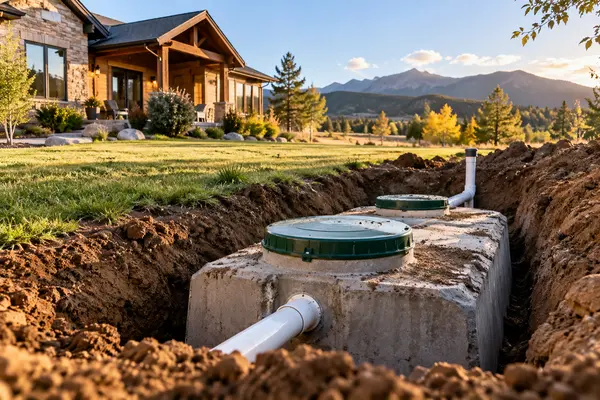
No well-and-septic home should change hands without a septic inspection. The system, technically an onsite wastewater treatment system, handles everything the home flushes and drains, and a failed one is a five-figure replacement.
Have it inspected and pumped, find out its age and size, and confirm it's permitted and sized for the home. If you plan to add bedrooms later, the septic capacity may limit you, since permitted capacity is tied to bedroom count. Better to know now than after you've drawn up addition plans.
Look hard at the roof and snow load
Durango winters are real. Roofs here deal with heavy snow, freeze-thaw cycles, and ice dams, and they age faster than roofs in mild climates. Have the inspector pay close attention to roof condition, age, and remaining life, plus signs of past ice-dam leaks around the eaves.
On rural and older homes, also ask about the structure's snow-load design, especially on decks, porches, and outbuildings. A barn or shop roof that's slowly sagging under decades of snow is telling you something.
Check water, access, and the things city buyers never think about
Rural properties come with a checklist suburban buyers never see.
Access. Is the road to the property a legal, recorded easement, or just a track people have been using? Visible use isn't the same as legal access, and this one trips up buyers constantly. Confirm it in the title work.
Heating fuel. Many rural homes run on propane, with a tank you either own or lease. Find out which, and check the tank's age and condition.
Outbuildings. Barns, shops, and sheds should get a look too, for structure, wiring, and roof.
Drainage and grading. On a hillside or near a drainage, you want to know how water moves during spring runoff and summer thunderstorms.
And on any home, ask whether it's ever been tested for meth contamination if anything about its history raises a flag. It's rare, but remediation is costly, and a test is cheap peace of mind.
On older in-town homes connected to city sewer, consider a sewer scope. A camera run down the main sewer line shows whether roots, cracks, or a collapsed section are lurking underground, and a failed sewer line under a mature yard full of big trees is an ugly, expensive surprise. It's a modest add-on cost that can save you a five-figure dig. Older Durango homes near the big cottonwoods and elms are exactly the candidates for it, since decades of roots find their way into aging clay or cast-iron pipe. If the home's got some age and some trees, scope the line.
Use the results wisely
An inspection isn't pass-fail. Almost every home turns up something. The point is to understand the property's real condition and its near-term costs, then decide whether to proceed, renegotiate, or walk.
A good local agent helps you read the report in context. A thirty-year-old roof with two years left is a price conversation, not a dealbreaker. A failed septic or a well that won't produce in August might be. Knowing the difference is the whole game, and it's why hiring inspectors who actually know mountain and rural properties matters more here than almost anywhere.
Choosing the right inspector
Not all inspectors are equal, and out here the difference shows. A suburban inspector who's great with tract homes may have never evaluated a well, a septic leach field, a steep mountain roof, or a wood-burning setup. You want someone who inspects properties like the one you're buying, all the time.
Ask how long they've worked in this area, whether they're comfortable with rural systems, and what their report looks like. A good report is thorough, photo-heavy, and prioritized, so you can tell the difference between a cosmetic nitpick and a real problem. Ask whether they handle radon, water, and septic themselves or coordinate specialists, since some tests require licensed pros, like radon testing, which in Colorado generally must be done by a licensed radon professional since July 1, 2022 (La Plata County Public Health, 2026).
Cheapest is rarely the goal here. A thorough inspector who catches a failing septic or a structural issue saves you tens of thousands. A cheap one who misses it costs you that and more. Your agent should be able to point you to inspectors with a real local track record, and it's worth attending the inspection in person so you can ask questions and see the issues with your own eyes.
What to do with the report
The inspection report isn't the end. It's a negotiating tool and a planning document. Once you have it, you've generally got a few moves.
You can ask the seller to make repairs before closing, which works for clear health-and-safety items. You can ask for a price reduction or a closing-cost credit instead, then handle the repairs yourself afterward, which a lot of buyers prefer because they control the quality of the work. You can accept the home as-is if the issues are minor or already priced in. Or, if something major and unfixable turns up, you can walk away within your inspection contingency and keep your earnest money.
Pick your battles. Going back to the seller with a fifteen-item nitpick list often sours the deal and gets you less than focusing on the few things that genuinely matter, the safety issues and the big-ticket systems. A roof at the end of its life, a failing septic, an electrical hazard, a well that won't produce, those are worth pressing on. The squeaky cabinet door is not. A good agent helps you separate the signal from the noise and frame the ask so the seller actually says yes. That mix of a sharp inspector and an agent who knows what matters out here is worth far more than whatever you save by cutting corners.
Frequently Asked Questions
What does a home inspection cost in Durango?
General inspection pricing varies with the home's size and complexity, and rural homes with wells, septic, and outbuildings cost more because there's more to inspect. Add-on tests like radon, water quality, and septic are usually priced separately. Your agent can point you to reputable local inspectors.
Do I really need a radon test in Durango?
Yes. La Plata County averages about 5.5 pCi/L, and roughly half of local homes test above the EPA action level of 4.0 (La Plata County Public Health, 2026). The test is inexpensive and mitigation is usually straightforward, so there's little reason to skip it.
What should I check on a home with a well?
Test water quality and flow rate, and confirm the well's depth, age, and permit. Colorado well permits limit what the water can be used for, so verify the permit allows livestock, irrigation, or whatever you're planning before you close.
How important is a septic inspection?
Very. A failed septic system is a major expense, and capacity is tied to bedroom count, which can limit future additions. Have it inspected and pumped and confirm it's permitted and properly sized before closing.
Can I waive the inspection to win in a competitive market?
On a mountain or rural property, I'd strongly advise against it. The inspection contingency protects you from inheriting expensive hidden problems with the roof, well, septic, or structure. The risk usually isn't worth the edge it buys you.
How do I choose a home inspector near Durango?
Pick someone who regularly inspects properties like the one you're buying, including rural systems like wells and septic. Ask about their local experience, the detail of their reports, and how they handle radon, water, and septic testing. A thorough inspector is worth more than the cheapest one.
What can I do after the inspection turns up problems?
You can ask the seller to make repairs, request a price reduction or closing-cost credit, accept the home as-is, or walk away within your inspection contingency if something major surfaces. Focus on safety issues and big-ticket systems rather than a long list of minor nitpicks.
Buying a home that needs a closer look?
Mountain and rural properties reward buyers who inspect them carefully and punish the ones who don't. Ashley Blackmore and the team at HOMESFORSALEDURANGO.COM know which inspections matter out here and which inspectors to trust, across Durango and rural La Plata County.
Call (970) 444-2431 or connect through HOMESFORSALEDURANGO.COM.
Recent Posts






Leave a reply